
Like the rest of our body, our brain requires energy to function. Research indicates that, on average, an adult brain in a resting state consumes about 20% of the body’s energy. (Interestingly, our muscles also consume roughly 20%, despite making up nearly 40% of our body mass; the heart uses about 5%, breathing about 5%, and digestion about 10%.)
Approximately one-quarter of the brain’s energy consumption is used for maintaining neurons and glial cells, while the remaining 75% is devoted to processing and transmitting information—sending and processing electrical signals across the brain’s circuits. Most of this energy is consumed by synapses, where cells continuously pump ions into the intercellular space, exchanging potassium and sodium to generate electrical charges. This activity is essential for the brain’s circuits to function but is highly energy-intensive.
The brain never shuts off. Even while we sleep and rest, our neurons communicate, updating each other on events.
When a specific task requires a particular brain region, that area’s energy demand increases, and its circuits become particularly active. For example, when speaking to another person, the speech center (Broca’s area) activates.
Normally, most of our neurons remain at rest to conserve energy, waiting to spring into action when needed. However, when we face a conflict, multiple brain regions become active, multiplying the number of simultaneously activated neurons and dramatically increasing the brain’s need for nutrients and oxygen—similar to how leg muscles demand more energy during a sprint.
The difference is that, unlike muscles, which can store excess carbohydrates, the brain has no energy reserves. It requires a continuous supply of oxygen and nutrients to function properly. If this supply is interrupted, neurons quickly shut down. (If the brain contained cells that stored reserve energy, these would take up space between neurons, increasing the length of electrical signals and requiring even more energy to operate.)
So, how does our brain meet the increased energy demand during a conflict?
High Blood Sugar
Under normal conditions, most cells require insulin to absorb glucose from the blood.
The brain is an exception, as it doesn’t rely on insulin and uses a different mechanism to absorb glucose through the blood-brain barrier, ensuring its continuous energy needs are met even in the absence of insulin. However, this requires an adequate blood sugar level.
When we encounter resistance—when we must overcome an opponent (and feel strong enough to fight)—glucagon production by the alpha islet cells of the pancreas continues unabated (triggering the release of stored sugars in the presence of stress hormones). However, the activation of the brain relay linked to the beta islet cells blocks insulin secretion, resulting in elevated blood sugar levels.
 The cause of high blood sugar is thus a "conflict of resistance,” a conflict where we take up the challenge, are forced to fight or compete, and have no option to surrender. In such cases, the body provides an extra energy boost (additional nutrients) to the brain through excess sugar, enabling it to perform effectively.
We experience this whenever we resist someone, something, a situation, a treatment, or a behavior; when we fight, compete, or strive against someone or something; and when we feel we have the strength or knowledge to resolve it favorably and assert our will.
The greater our resistance, the higher the blood sugar level we may experience.
Low Blood Sugar
Glucagon has the opposite effect of insulin, stimulating high blood sugar levels. In its absence, blood sugar drops, causing the brain and muscles to starve, leading to weakness and feelings of frailty.
Low blood sugar occurs when the brain relay for the alpha islet cells is activated, blocking glucagon production.
Low blood sugar is also the result of a conflict, differing from the previous one in that it involves a so-called “feminine resistance” or a “conflict of disgust.” This occurs when the opposing party, problem, or phenomenon has power over us, when we face an overwhelming force, and we don’t feel capable of overcoming it. We resist, but feel powerless.
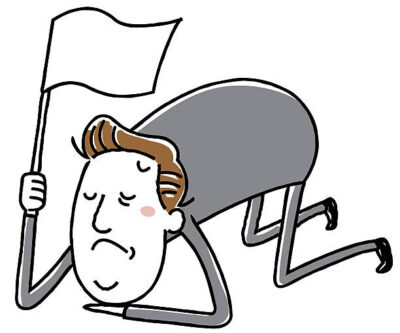 This is a situation where we face someone or something significantly stronger than us (or at least perceive it that way). Instead of provoking them further, knowing a single blow could knock us down, we stay quiet, withdraw, or even faint, as this increases our chances of escaping unharmed or with minimal loss, ensuring survival.
We can experience this phenomenon in everyday life without measuring blood sugar, such as:
-
When a task overwhelms us,
-
When a loved one or we receive a diagnosis with no apparent way out, but we refuse to accept it,
-
When we feel aversion toward an authority figure or someone we depend on but can’t express it, as doing so would cause greater harm to ourselves, etc.
Blood sugar fluctuations, whether high blood sugar (or low insulin levels) or low blood sugar (or low glucagon levels), persist only as long as the associated conflicts remain active, reappearing briefly during the epileptoid crisis in the resolution phase.
This means that blood sugar changes arise to meet demands caused by environmental changes, to resolve conflict situations, and to ensure our survival. They are a natural part of everyday life and are NOT caused by a malfunction of the body or exhaustion of the pancreas.
Of course, labeling it as DIABETES makes it far more likely that we’ll commit to (lifelong) treatment procedures.


